Easy Minecraft Crochet Projects: Free Patterns & Ideas
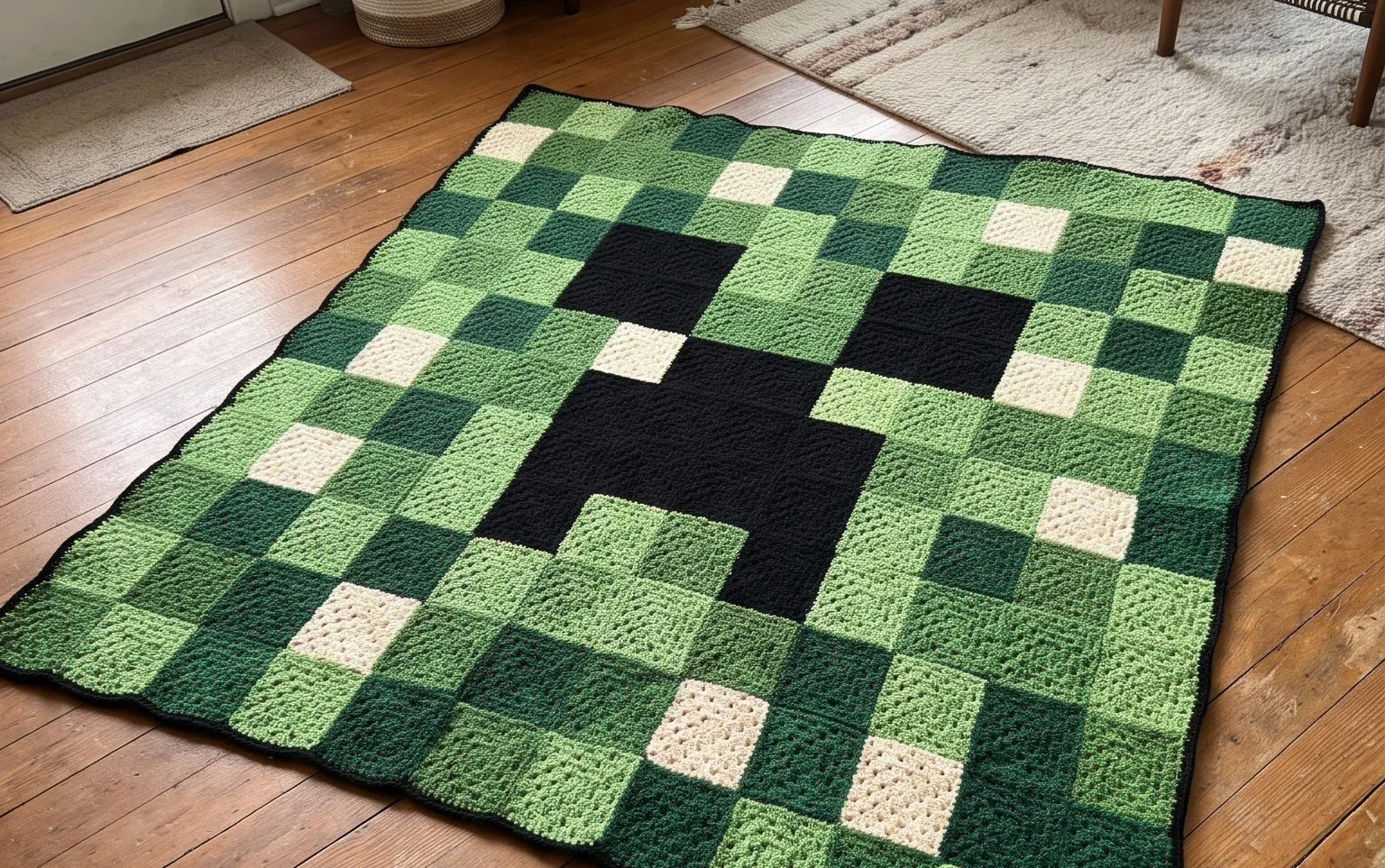
Blocky color changes and square shapes give Minecraft crochet projects their familiar pixel look, from a Creeper face to a tiny grass block. These patterns can become soft toys, coasters, blankets, or small gifts for players, and the finished pieces add a playful touch to a bedroom or game room. Beginners can start with a flat square and practice single crochet, while more experienced makers can join several squares or shape them into amigurumi. The projects are satisfying because each color change makes the design clearer, and small pieces are easy to finish in a few evenings. You’ll find ideas for choosing yarn and hooks, keeping colorwork tidy, and using simple stitch or pixel charts to turn Minecraft-inspired blocks and characters into crochet.
Why You’ll Love This Pattern
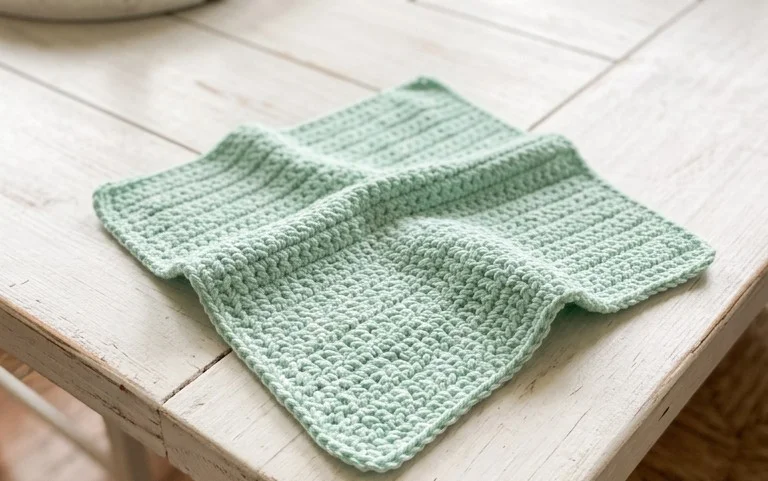
A firm cotton dishcloth is useful at the sink, easy to wash, and small enough to finish in an evening. This beginner-friendly pattern uses single crochet throughout, so you can focus on keeping the edges straight instead of learning several stitches at once. The simple rectangle also works well with leftover cotton yarn, as long as you have enough for about 100 yards.
The close fabric is sturdy for wiping counters and dishes, and the finished cloth measures about 10 by 12 inches. A crocheter who completed the pattern might describe it this way:
The rows were easy to keep track of, and the cotton made a cloth that feels sturdy without being stiff. I finished it in one sitting.
— Mara, beginner crocheter
Pattern Overview & Skill Level
- Skill Level: Beginner. You need to chain, single crochet, and turn your work.
- Approximate Time: 2 to 3 hours, depending on your pace and how often you stop to check your stitch count.
- Construction: The dishcloth is worked flat in rows from the bottom edge upward. Each row has 30 single crochet stitches.
- Finished Dimensions & Sizing: About 10 inches wide by 12 inches long after washing and drying flat. Measurements may vary with yarn, hook, and personal tension.
Materials & Supplies Needed
- Yarn: About 100 yards of medium-weight cotton yarn, also called Worsted #4. One solid color is enough; use a second color only if you plan to make stripes and have extra yarn.
- Hook: 5.0 mm / H-8 crochet hook.
- Notions: Tapestry needle for weaving in the two yarn ends, scissors, and a ruler or tape measure. A stitch marker is optional for marking the first stitch of a row.
- Substitutions: A cotton-linen blend can be used if its yarn label recommends a similar hook size. A thinner yarn makes a smaller, lighter cloth; a thicker yarn makes a larger, heavier one and may need a larger hook. Avoid acrylic for a cloth used to handle hot cookware, since it can soften with heat.
Check your yarn label for care instructions before starting. Cotton can feel firm while you crochet, but it usually relaxes a little after its first wash.
Stitch Guide & Abbreviations (US Terms)
- ch: Chain. Yarn over and pull the yarn through the loop on the hook.
- sc: Single crochet. Insert the hook into the stitch, yarn over and pull up a loop, then yarn over and pull through both loops.
- st / sts: Stitch / stitches.
The turning chain is one chain at the start of each row. It does not count as a stitch, so work the first single crochet into the first stitch of the previous row.
Step-by-Step Pattern Instructions
Dishcloth Body
- Foundation: Ch 31. The first 30 chains form the stitches for Row 1; the remaining chain is the turning chain. (30 foundation sts)
- Row 1: Sc in the second ch from the hook and in each ch across. Ch 1 and turn. (30 sts)
- Rows 2–42: Sc in each st across. Ch 1 and turn after each row. Repeat this row 41 times, keeping 30 stitches in every row. (30 sts each row)
Lay the piece flat and measure it before fastening off. With the gauge below, 42 rows should give a length close to 12 inches. If your cloth is shorter, add a few more rows; if it is longer, stop earlier. The width comes from the foundation chain, so check that it is near 10 inches before continuing far into the pattern.
Finishing
- After Row 42, cut the yarn, leaving a tail about 6 inches long. Pull the tail through the loop on your hook to secure it.
- Thread the tail onto a tapestry needle. Weave it through several stitches on the edge, then change direction and weave through a few more stitches so it is held securely. Repeat with the beginning tail.
- Wash and dry the cloth according to the yarn label. Smooth it into a rectangle while damp and let it dry flat.
Gauge: 12 single crochet stitches and 14 rows measure about 4 inches square when worked in the stated yarn and hook. To check, make a small swatch, wash it, and measure the middle section rather than the curled edges. If your swatch is wider than 4 inches, try a smaller hook; if it is narrower, try a larger hook. The gauge affects the finished dimensions and yarn use.
Care & Washing Instructions
- Wash cotton in cool or warm water, up to 40°C (104°F), unless the yarn label gives different instructions.
- Dry flat for the neatest shape, or tumble dry on low only if the yarn label allows it.
- While damp, reshape the edges by hand and let the dishcloth dry flat; blocking is usually unnecessary for this practical project.
Pro Tips & Common Mistakes to Avoid
- Keep an even edge: Work the first single crochet into the first actual stitch, not into the turning chain. At the far edge, make the final stitch in the last stitch from the previous row. Missing either edge stitch can gradually narrow the cloth.
- Count every row: Check for 30 stitches before turning. If you tend to lose your place, put a marker in the first stitch of each row and move it up as you work.
- Hide ends securely: Weave each tail through the back of several stitches, then change direction. Snipping a tail immediately after one pass can let it work loose during washing.
- Adjust size thoughtfully: Add or remove foundation chains in the starting chain to change the width, and add or remove rows to change the length. A larger cloth uses more yarn; a smaller hook may make the fabric denser and use slightly more yarn per square inch.
Frequently Asked Questions
Can I use a different yarn fiber?
Cotton is a practical choice because it absorbs water and tolerates regular washing. A cotton-linen blend is also suitable if the label recommends a compatible hook. Wool can shrink or felt in warm washing, and acrylic is not a good choice for a cloth that may touch hot pans.
How can I make the dishcloth larger or smaller?
For a wider cloth, start with more chains, keeping the foundation chain count one higher than the number of stitches you want. For a longer or shorter cloth, work more or fewer rows. Measure your gauge first, since changing hook or yarn size also changes the finished dimensions.
Is this pattern suitable for a first crochet project?
Yes. It uses only chains and single crochet, with no shaping or stitch changes. Take time to count the first few rows and check that both sides stay straight. If the edges start to slope, look for a missed stitch or an extra stitch at the row ends.
Can I sell dishcloths made from this pattern?
Check the designer’s terms before selling finished items, and follow any credit or product-description requirements. Use your own photos and listing text, and do not present someone else’s written pattern as your own.
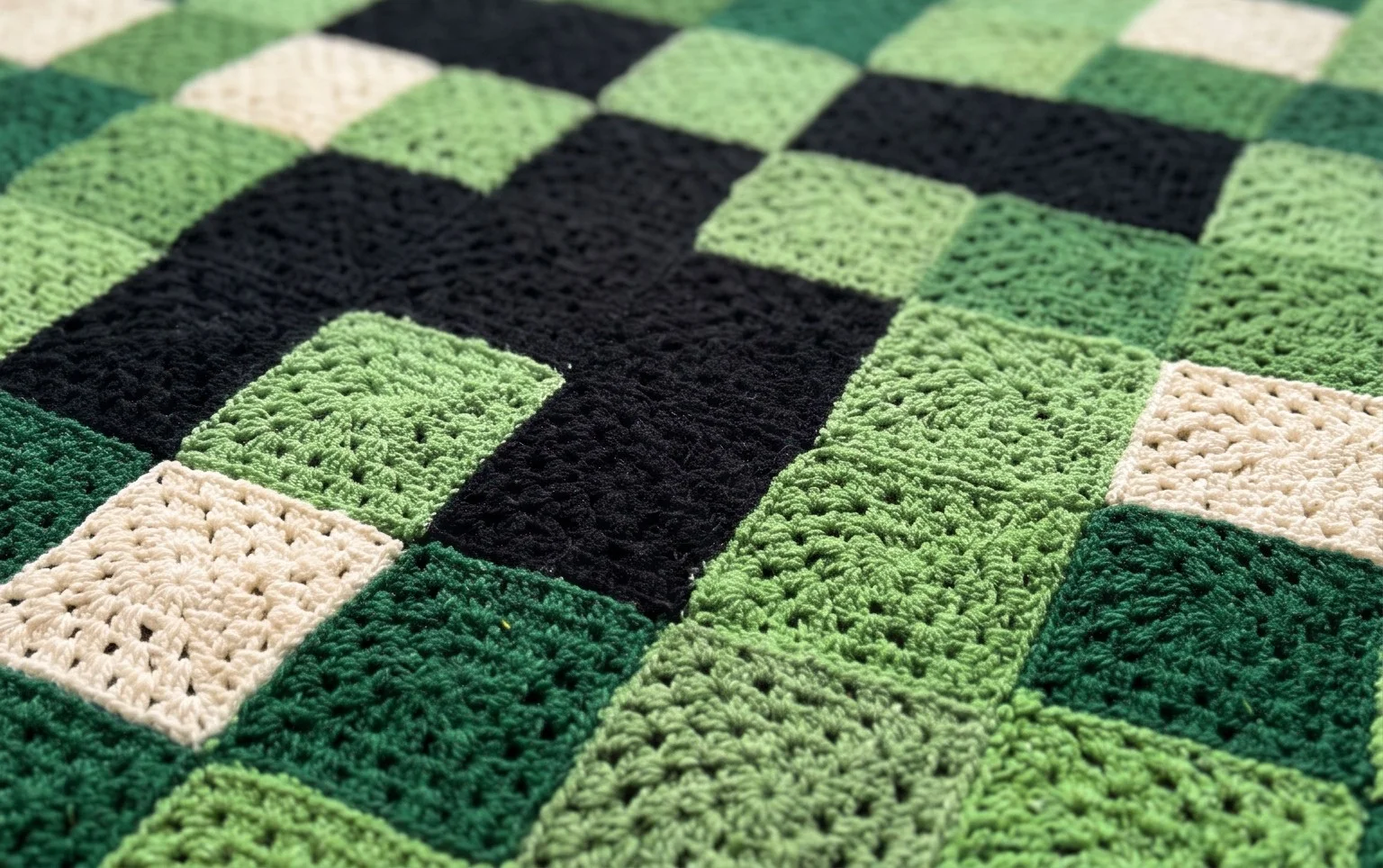
A finished Creeper square or soft block brings Minecraft’s pixel style into the real world, one neat crochet stitch at a time. To change the look without altering the basic design, swap the green shades for another character or block palette, such as blue and gray for water and stone. If you make one of these projects, share a photo on Pinterest or your favorite social platform so other crafters can see your color choices and finished details. You can also browse more free crochet patterns on the blog for your next evening project, whether you want a quick coaster, a colorful blanket square, or a small handmade gift for a Minecraft fan.