Easy Crochet Snowflake Dishcloth Free Pattern
Crisp cotton fibers create this rigid, textured square that cleans stubborn grime from kitchen surfaces while feeling surprisingly soft in your hands. This project is a grounding experience for makers of any skill level, offering a quiet, meditative pace that fits into a busy evening. You will work through simple chain and single crochet combinations that build a thick fabric without requiring complex count changes or difficult edges. Beginners find this construction approachable, while those who enjoy gift crafting appreciate the consistent, repetitive motion. This guide walks you through the foundation row and the specific stitch sequences needed to finish.
Why You’ll Love This Pattern
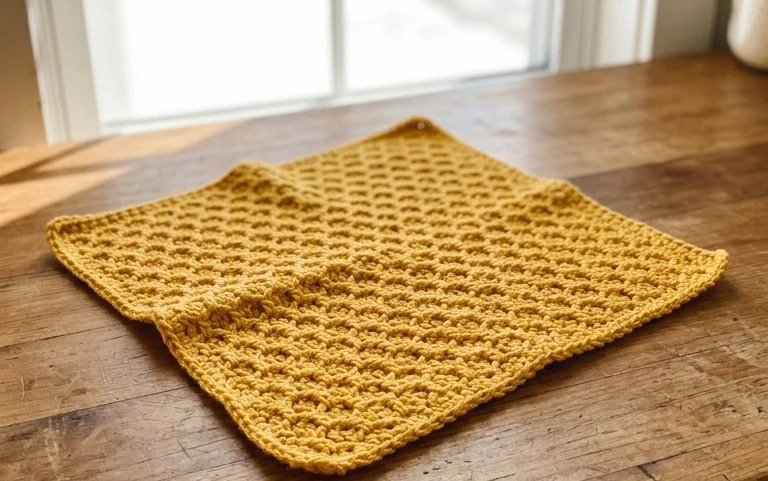
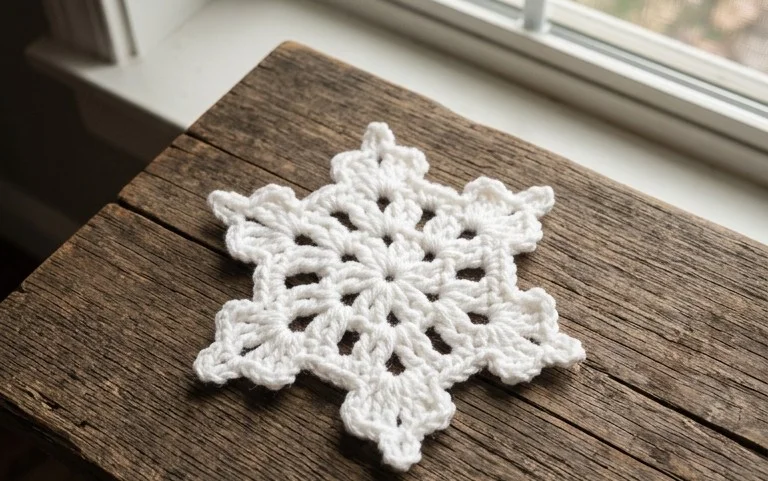
This classic crochet dishcloth is designed using the linen stitch, also known as the moss stitch, which creates a dense, woven-like fabric that is highly effective for scrubbing. Because it relies on a simple repeating sequence of chains and single crochets, it is the perfect project for building muscle memory while maintaining a consistent tension. You can finish one of these in a single evening, making them an ideal choice for last-minute gifts or stocking up your own kitchen. The resulting texture is sturdy enough to handle tough cleaning tasks yet soft enough to handle easily.
I managed to finish three of these during a weekend trip. The pattern is so meditative that I didn’t even need to look at my hands after the first few rows.
— Sarah, home crafter
Pattern Overview & Skill Level
- Skill Level: Beginner
- Approximate Time: 1 to 2 hours
- Construction: Worked in flat rows, back and forth, starting from a foundation chain
- Finished Dimensions: Approximately 8 inches by 8 inches
Materials & Supplies Needed
- Yarn: Worsted weight (#4) 100% cotton yarn, approximately 75 yards per dishcloth. Cotton is necessary for its absorbency and heat resistance.
- Hook Size: 5.0 mm (US H-8)
- Notions: Tapestry needle for weaving in ends, scissors, and a measuring tape.
- Yarn Substitutions: You may use a cotton-acrylic blend, but ensure the cotton content is at least 70% to maintain scrubbiness and water absorption. Using synthetic yarns like pure acrylic will result in a cloth that pushes water around rather than soaking it up.
Stitch Guide & Abbreviations (US Terms)
- ch: chain
- sc: single crochet
- st/sts: stitch/stitches
- sk: skip
- turn: turn your work to the other side to begin the next row
- Special Stitch: Linen Stitch (or Moss Stitch) is worked by placing a single crochet into the chain-space of the previous row, followed by a chain-one.
Step-by-Step Pattern Instructions
Main Dishcloth Body
The foundation chain must be an even number. This pattern starts with 32 chains to ensure a square shape.
- Row 1: Ch 32. Sc in the 4th ch from hook. *Ch 1, sk 1 ch, sc in the next ch. Repeat from * across until the end. Turn. (16 sc, 15 ch-1 spaces)
- Row 2: Ch 2 (counts as first ch and turn). Sc in the first ch-1 space. *Ch 1, sk the next sc, sc in the next ch-1 space. Repeat from * across, finishing with a sc in the turning chain space. Turn. (16 sc, 15 ch-1 spaces)
- Rows 3 to 30: Repeat Row 2 until the piece measures approximately 8 inches from the bottom edge.
Finishing
Once you reach the desired height, fasten off your yarn, leaving a 6-inch tail. Use your tapestry needle to weave the yarn tail securely back and forth through the stitches on the back side of the cloth. Trim any excess yarn flush with the fabric. No blocking is required for this item, as the cotton will naturally hold its shape after the first wash.
Care & Washing Instructions
- Machine wash in warm water on a gentle cycle to remove oils and food debris.
- Tumble dry on low heat or lay flat on a clean towel to air dry completely.
- Reshape the square while damp if it appears slightly skewed from usage.
Pro Tips & Common Mistakes to Avoid
- Maintain a consistent tension throughout the project. Cotton yarn has very little stretch, so if your stitches are too tight, the fabric will feel stiff and board-like.
- Place a stitch marker in the first chain-space of every row. This helps you identify exactly where to place your final stitch of the row, preventing the edges from accidentally decreasing.
- Weave your ends in multiple directions. Since these cloths are washed frequently, a simple knot will eventually come undone. Weaving through the fibers in three different directions ensures the tail stays hidden and secure.
- Adjust the size easily by chaining any even number. Keep in mind that a wider cloth will require significantly more yardage, so ensure you have enough yarn on hand if you decide to make your dishcloth larger than the standard 8-inch square.
Frequently Asked Questions
Can I use a larger hook for this pattern?
Yes, using a larger hook will make the fabric drapier and faster to crochet. However, it will also create larger gaps in the stitches, which may make the cloth less effective for scrubbing stubborn stuck-on food.
Is this pattern suitable for someone who has never crocheted before?
Absolutely. This pattern requires knowledge of only two techniques: the chain stitch and the single crochet. Because it is a flat, square piece, there is no complex shaping or assembly required.
Can I sell the dishcloths I make using this tutorial?
You are welcome to sell finished items made from this pattern as long as you credit the design. Please do not sell or redistribute the text of the pattern itself.
Why does my dishcloth keep getting narrower at the ends?
This is usually caused by missing the last stitch of the row. Ensure you are crocheting into the chain-space created by the turning chain at the end of every row to keep your edges straight.
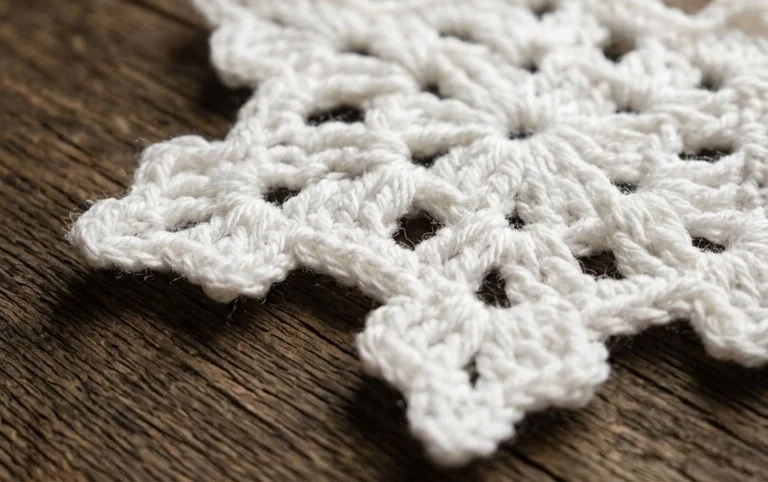
Your finished piece provides a heavy, reliable surface that scrubs cookware effectively and lasts through dozens of wash cycles. Consider using a variegated thread to add visual interest or increase your starting chain to create a larger, rectangular towel for your drying rack. I love seeing how these turn out in different color palettes, so please share a photo of your work on your favorite social media site. You can find more beginner-friendly projects and free patterns by browsing through the archives on my main blog page.